What is crypto?
the science of writing secrets

Cryptography is science of writing secrets.
When Julius Caesar sent letters to his generals, he moved every letter three places right so that his message looked like gibberish to an untrained eye.
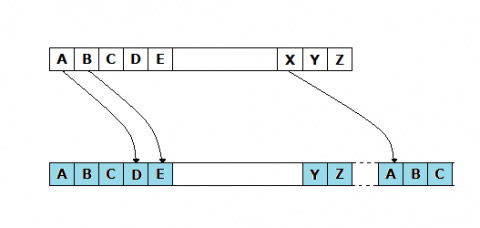
That’s encryption - the act of turning a message into a secret.
Ciphertext is the intermediate gibberish, and decryption turns that gibberish back into a message.
Today’s cryptography is way more advanced than Caesar’s. We use tons of fancy math every day to encrypt our passwords, medical records, bank account info, etc. That’s what the “s” in https:// stands for...
🔒 Secure.
If you go one level deeper, you’ll find that there are a few types of math for keeping secrets:
Symmetric 🔑
Asymmetric 🔑🔑
Hashes ❌
🔑 Symmetric secret-keeping uses a single key to encrypt and decrypt. It’s fast and simple and the clear choice if you know exactly who you want to share your secret with.
🔑🔑 Asymmetric secret-keeping uses two keys. You need both to encrypt and decrypt, so it’s great if you don’t know who you want to share your secret with ahead of time.
❌ Hashes are wild because they don’t use a key. The math takes your message and spits out some ciphertext that nobody can decrypt, which is exactly what you want if you’re storing your secret somewhere.
For a while, the only people who really cared about cryptography were a handful of mathematicians and computer programmers. That changed in 2008 when a cryptographer named Satoshi used 🔑🔑 and ❌ to create a computer program that gave rise to an entire economy we now call “crypto.”